Why the Adaptation Finance Gap Poses Risks to Global Stability
Climate negotiations in Brazil underscore a reality that many leaders can no longer ignore. Rising climate shocks continue to hit countries with greater force, yet funding intended to help nations adapt remains in short supply. UNEP’s latest Adaptation Gap Report 2025: Running on Empty shows a steep decline in global adaptation finance at the exact moment the world needs more substantial support.
UNEP executive director Inger Andersen captured the urgency with a clear message, stating that every nation now confronts direct climate impacts. The report notes that developing countries may require $310–365 billion per year by 2035. Even so, international public finance dropped from $28 billion in 2022 to $26 billion in 2023.
The numbers reveal a widening finance gap during a period of compounding physical shocks.
Why Climate Shocks Trigger Systemic Risk
Physical events rarely stay isolated anymore. Heat fuels drought conditions, drought triggers wildfire risk, and storms target infrastructure weakened by earlier disasters. As a result, climate disruptions often spiral through supply chains, communities, and financial systems. The worldwide economy still treats these events as short-term emergencies, yet researchers warn that climate shocks behave like financial contagion.
A New Lens on Global Risk

Instagram | @ksqdradio | Delton Chen referred to climate damages as a “systemic externality” at COP30, likening them to financial crises.
At COP30, climate economist Delton Chen described climate damages as a “systemic externality” that ripples across borders with surprising speed. His assessment compares climate impacts to financial crises rather than local hazards.
Research from Dr. Nicola Ranger at the London School of Economics supports this view. Ranger and co-author Emma O’Donnell argue that ecosystems, such as forests and watersheds, function as macro-critical infrastructure.
When damaged, these systems can trigger major economic disruptions that rival the 2008 global financial crisis. They call for the recognition of Global Systemically Important Natural Systems (G-SINS), similar to how regulators classify major banks.
The Cost of Outdated Financial Systems
According to Brazilian climate-policy expert Natalie Unterstell, current financial structures treat climate risk with outdated tools. She explains that many countries invest in resilience but still face higher borrowing costs, reduced investor confidence, or tighter debt rules. As a result, climate losses compete with essential budgets, such as health and transportation, limiting long-term planning.
Unterstell highlights two immediate fixes:
1. Reform MDB capital rules so resilience investments count as risk-reducing.
2. Create pooled guarantees and FX stabilization tools that prevent adaptation from increasing national debt burdens.
Her warnings align with UNEP’s concern that the Glasgow Climate Pact goal of $40 billion per year by 2025 will remain unmet. Even the broader target of $300 billion per year by 2035 looks out of reach. UNEP estimates the private sector could supply up to $50 billion annually, yet it currently delivers far less.
The Path to Systemic Reform
The Baku to Belém Roadmap outlines a comprehensive reorganization of global climate finance. It argues that resilience must influence how capital flows worldwide, not remain confined to development budgets. The roadmap proposes reform across five areas: concessional finance, coordination rules, fiscal space, prudential standards, and financial instrument design. It also states that raising $1.3 trillion per year by 2035 is possible through systemic upgrades.
Unterstell supports this direction and notes that central banks and regulators still analyze data instead of acting on it. She also stresses the importance of non-debt instruments, saying that an implementation plan could shift global momentum. Political coalitions will determine whether this roadmap becomes a historic turning point.
Public and Philanthropic Funding
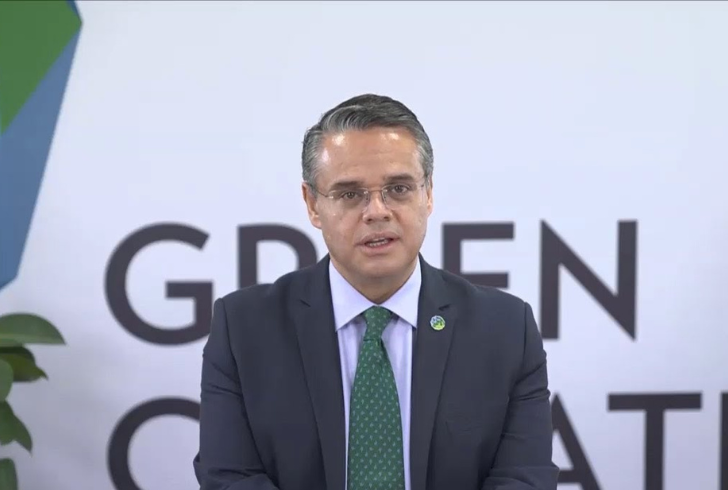
YouTube | Green Climate Fund | Henry Gonzalez highlights GCF’s role in funding high-risk climate solutions.
A ClimateWorks Foundation review shows foundation funding reached $873 million this year. Although philanthropy increased by more than 50%, it cannot carry the weight of a global market failure. Public climate finance also remains under pressure, which makes the role of the Green Climate Fund (GCF) even more crucial.
GCF Chief Investment Officer Henry Gonzalez explains the fund’s mission clearly. He says the GCF steps into high-risk areas where private actors hesitate, turning climate resilience into a viable investment category.
The GCF committed $2.2 billion in 2024 and now manages a $19 billion portfolio, but Gonzalez notes that even this pace still falls short of the scale needed.
Why Markets Fail on Adaptation Finance
Even though adaptation investments usually pay off, markets fail to reward them. Howden Foundation CEO Claire Habron points to recent research showing a return rate as high as ten-to-one for adaptation spending. Yet traditional financial metrics often overlook avoided losses, long-term gains, or resilience dividends.
This gap keeps high-value projects undervalued and slows private investment. Unterstell stresses that the adaptation finance gap now threatens global stability, not just fairness or equity.
Global Adaptation Plan Still Lacking
UNEP’s report warns that the world has no mechanism in place once the existing pledge expires. Unterstell described the situation as standing at the edge of an “adaptation finance cliff.” Without a successor agreement, adaptation funding may slide backward, leaving developing nations with unpredictable flows and widening vulnerabilities.
Andersen emphasizes the economic logic behind urgent investment. She says the choice is simple: countries can invest in adaptation now or face much higher costs later. Long planning cycles make predictable funding essential.
Economic Impact of Adaptation Delays
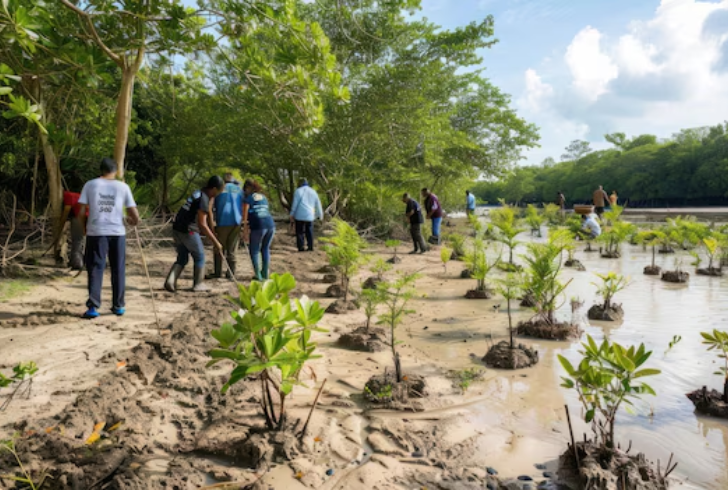
Freepik | chhayalex9999 | Communities build strength and stability as workers restore mangroves and protect coastlines from rising seas.
Climate shocks already play a major role in price swings, supply-chain strain, credit downgrades, and insurance losses. Certain regions now struggle to maintain insurance coverage altogether, shifting risk back onto households and governments. Research from Ranger and O’Donnell notes that nature loss alone can create GDP shocks comparable to severe financial crises.
Even so, adaptation investments create openings for new growth. Unterstell highlights opportunities that combine resilience with emissions reduction, such as nature-based flood defenses, cooling efficiency upgrades, and climate-smart agriculture. These efforts support long-term productivity while strengthening national stability.
SOAS researcher Dr. Harald Heubaum adds that resilience functions as a measurable driver of economic growth. It not only protects communities but also improves shared prosperity.
A Turning Point for Global Finance
UNEP’s message at the climate negotiations is unmistakable. Andersen calls for a global effort to align public and private capital, warning that delays only increase risks and weaken financial systems.
Adaptation finance is now a central component of global stability. Rising shocks, limited budgets, and outdated financial structures demand urgent action. Decisions made today will shape the global economy’s approach to managing climate risk for decades.
With stronger cooperation, better tools, and updated financial architecture, nations can reduce risks, protect communities, and build resilient systems that withstand future climate shocks. Clear commitments create momentum and deliver consistent benefits.